

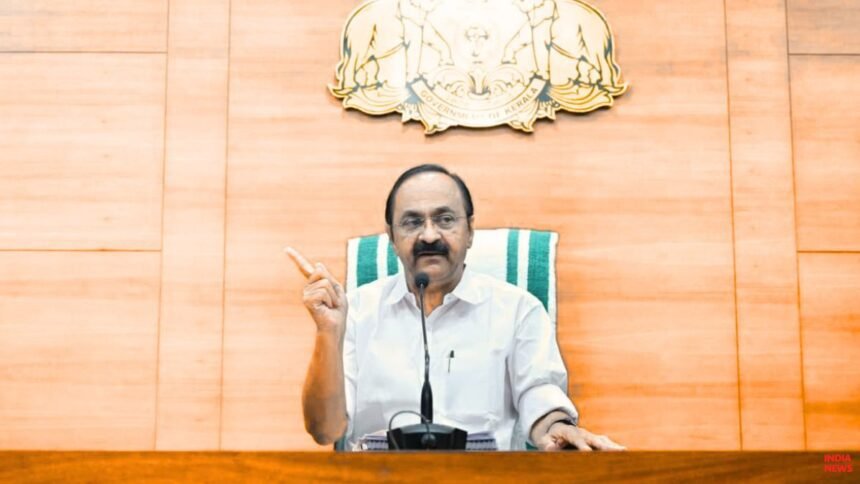
The newly elected United Democratic Front government in Kerala has officially scrapped the controversial SilverLine Project, bringing a major shift in the state’s infrastructure and transportation plans. The decision includes denotifying land acquisition orders connected to the project, ending years of uncertainty for thousands of affected property owners across Kerala.
The announcement was made after the new administration stated that the project lacked central approval, faced strong public opposition, and raised serious environmental and financial concerns.
What Was the SilverLine Project?
The SilverLine Project, also known as K-Rail, was proposed as a semi-high-speed rail corridor connecting Kasaragod in northern Kerala to Thiruvananthapuram in the south.

The project aimed to:
- Reduce travel time across Kerala
- Improve rail connectivity
- Decrease road traffic congestion
- Support faster intercity transportation
The proposed corridor stretched approximately 530 kilometers and was expected to allow trains to travel at significantly higher speeds compared to existing rail services.
Why the SilverLine Project Faced Opposition
From the beginning, the project generated intense public debate across Kerala. Residents, environmental groups, economists, and opposition parties repeatedly raised several concerns.

Land Acquisition Concerns
One of the biggest issues involved land acquisition. Thousands of families feared displacement and property loss after survey stakes were placed in several districts.
Many property owners claimed the following:
- They could not freely sell their land.
- Property values became uncertain
- Construction and renovation activities were affected.
- Legal ownership concerns increased
The denotification of acquisition orders now removes many of these restrictions.
Environmental Issues
Environmental experts and protest groups questioned the ecological impact of the project. Critics argued that the rail corridor could affect the following:
- Wetlands
- Paddy fields
- Water flow systems
- Biodiversity-sensitive regions
Kerala’s flood vulnerability also became part of the debate, with opponents demanding stronger environmental studies before project approval.
Financial Viability Questions
Another major concern centered around project cost and debt burden.
Critics questioned:
- Whether Kerala could financially sustain the project
- Long-term repayment obligations
- Operational profitability
- Potential burden on public finances
The state government stated that the project did not receive necessary approvals from the central government, which further complicated financing and implementation.
UDF Government’s Decision to Scrap SilverLine
The United Democratic Front government officially announced that the project would not move forward.
According to government statements:
- Land acquisition notifications will be withdrawn.
- Survey markers and stones will be removed.
- Pending project-related actions will stop
- Cases linked to anti-SilverLine protests may be reviewed for withdrawal, subject to court approval.
The decision marks one of the most significant policy reversals in Kerala’s recent infrastructure history.
Impact on Landowners
For many residents, the announcement brings relief after years of uncertainty.
Property owners in affected regions had expressed frustration over the following:
- Delayed compensation clarity
- Inability to use land normally
- Anxiety regarding relocation
- Falling buyer interest in marked properties
With denotification now announced, affected landowners may regain full control over property usage and transactions.
Political Impact in Kerala
The SilverLine debate became one of Kerala’s most politically sensitive infrastructure issues over the past few years.
Supporters argued the project could modernize Kerala’s transportation network, while opponents described it as financially risky and socially disruptive.
The new government’s move to scrap the project reflects changing political priorities and public sentiment after the state election.
Could SilverLine Return in the Future?
As of now, the project has been officially scrapped by the Kerala government. However, future governments could revisit large-scale rail modernization plans in different forms.
Any future proposal would likely require:
- Stronger environmental assessments
- Wider public consultation
- Central government support
- Clearer financial planning
- Improved rehabilitation policies
For now, the original Silver Line project stands cancelled.
Public Reactions After the Announcement
Public reactions remain divided.
Supporters of the cancellation say:
- It protects people’s homes and land.
- Kerala avoids a massive debt burden.
- Environmental risks are reduced.
Supporters of SilverLine believe:
- Kerala may lose a major modernization opportunity.
- Faster transportation infrastructure remains necessary.
- Long-term economic growth could slow without large transit upgrades.
The discussion around Kerala’s future transport infrastructure is expected to continue in the coming years.
References
FAQ
What is the SilverLine project in Kerala?
The SilverLine Project was a proposed semi high-speed rail corridor planned to connect Thiruvananthapuram and Kasaragod across Kerala. The project aimed to reduce travel time and improve statewide rail connectivity.
What are the 7 bullet train projects in India?
India has proposed multiple high-speed rail corridors, including projects such as Mumbai–Ahmedabad, Delhi–Varanasi, Mumbai–Nagpur, Delhi–Ahmedabad, Chennai–Mysuru, Varanasi–Howrah, and Delhi–Amritsar. The Mumbai–Ahmedabad corridor is currently the most advanced project under construction.
Are K-Rail and SilverLine the same?
Yes, K-Rail and SilverLine are connected. Kerala Rail Development Corporation is the agency managing the project, while SilverLine is the name of the proposed semi high-speed rail corridor.
What is the cost of K-Rail project?
The estimated cost of the SilverLine Project was around ₹63,000 crore based on earlier project proposals. Actual costs could have changed depending on revisions, inflation, and approval stages.
How This Article Was Created
This article was created using publicly reported information, official government statements, and verified news coverage related to the SilverLine project cancellation and land acquisition denotification in Kerala. No unverified claims or speculative political conclusions were included.
Final Thoughts
The cancellation of the SilverLine project marks a major turning point in Kerala’s infrastructure planning. By denotifying land acquisition orders, the United Democratic Front government has addressed one of the largest public concerns surrounding the project.
While supporters view the decision as protection for people and the environment, others see it as the loss of an ambitious transportation vision for the state.
The long-term impact of scrapping SilverLine will likely remain part of Kerala’s political, economic, and infrastructure discussions for years ahead.